
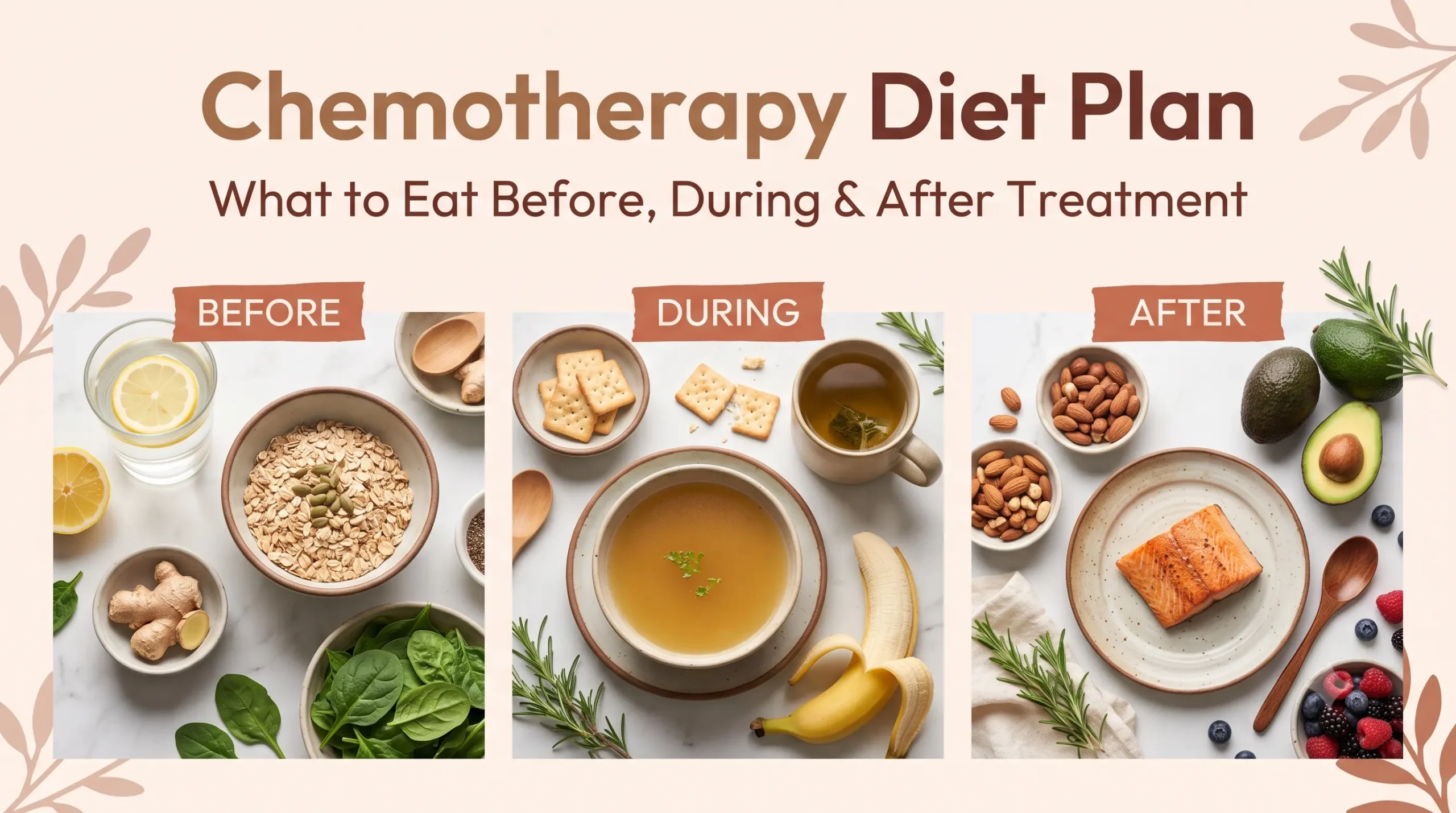
A good chemotherapy diet plan focuses on enough calories and protein, steady fluids, small frequent meals and food safety. Eat nutritious, balanced meals before treatment, adjust to your side effects during treatment, and rebuild variety and strength afterward. Your exact plan depends on your treatment, blood counts and symptoms, so confirm it with your oncology team or dietitian.
Key takeaways:
- The real nutritional risk is weight and muscle loss, not imperfect eating.
- Small, frequent meals usually work better than three big ones.
- On bad days, any calories and protein you can tolerate count.
Why Nutrition Matters During Chemotherapy
Chemotherapy changes appetite, taste and digestion, so eating enough becomes a daily struggle. Online advice often contradicts itself, and “miracle diets” promise far more than they deliver. Unplanned weight and muscle loss can weaken recovery and make treatment harder to tolerate.
What chemotherapy does to eating:
Nausea, mouth sores, taste changes, diarrhea, constipation and fatigue can all reduce what you eat.
The real risk:
Most patients are not in danger from “wrong” foods. They are in danger of eating too little.
Why one plan doesn’t fit everyone:
Cancer type, drugs, blood counts and conditions like diabetes all change what is right for you.
A typical example is a daughter whose father barely finished one plate at lunch. She switched from three large meals to six small ones, with a protein item in each, and his daily intake improved within a week.
Chemotherapy Diet Plan: Before, During & After
Before treatment:
Build your reserves. Include protein (dal, eggs, paneer, fish, soy) in every meal, drink enough fluids, and keep easy foods like khichdi, oats and soups at home. Sort out dental problems and food-safety habits early. Ask your team before starting any supplement.
During treatment: what to eat during chemotherapy
- Eat small meals every 2-3 hours instead of waiting for hunger.
- Choose protein at each meal: dal, well-cooked eggs, paneer, pasteurized curd, cooked fish or chicken, soy.
- Add easy carbohydrates such as khichdi, rice, roti, daliya and porridge.
- Sip fluids through the day: water, buttermilk (pasteurized), coconut water, soups.
- Follow basic food safety: cooked food, washed produce, no old leftovers or roadside food, especially when blood counts are low.
Diet after chemotherapy:
Return to variety gradually. Rebuild muscle with protein, add colorful vegetables and fruit, choose whole grains, and stay hydrated. As energy returns, aim for a healthy long-term weight and keep following up with a dietitian.
Sample Indian day plan (adjust to your tolerance):
- Breakfast: Vegetable daliya or besan chilla with curd
- Mid-morning: Banana or a fruit smoothie
- Lunch: Dal, rice or roti, cooked vegetables
- Evening: Soup or a handful of soaked nuts
- Dinner: Khichdi with a little ghee, or paneer with soft roti
- Bedtime: Warm milk if tolerated
Foods for Side Effects & Energy
Nausea and vomiting:
Choose dry, bland, cool foods such as toast, crackers, rice and boiled potatoes. Ginger tea may help if your team approves. Take small sips and avoid strong cooking smells.
Low appetite:
Eat by the clock, not by hunger. Use small calorie-dense portions like nut butters, smoothies, milkshakes, soups and a little ghee.
Mouth sores and taste changes:
Pick soft, cool, mild foods like curd rice, mashed banana and porridge. Use plastic cutlery for a metallic taste, and try lemon or mint if your mouth tolerates it.
Diarrhea and constipation:
For diarrhea, use ORS, coconut water, banana and rice. For constipation, increase fluids and gentle fiber such as papaya or oats. Call your doctor if either is severe or lasts more than a day or two.
Foods to increase energy during chemotherapy:
Pair protein with complex carbohydrates, for example curd with daliya or dal with rice. Dates, bananas, nuts and seeds give steady energy. Keep regular meal times, and take a short walk if your doctor allows.
Myths, Mistakes & Comparison Table
Common myths
- “Sugar feeds cancer, so cut all carbs.” All cells use glucose. Extreme restriction risks dangerous weight loss.
- “Only juices and raw food help.” There is no reliable evidence, and raw food adds infection risk.
- “Fasting during chemo helps.” Evidence is limited. Never fast without your oncologist’s approval, especially if underweight.
- “Turmeric and herbal drinks boost chemo.” Some herbs and supplements interact with treatment. Clear them first.
Common mistakes:
Skipping meals when nauseous, relying on liquids only, taking supplements without supervision, and copying a stranger’s diet.
| Phase | Main goal | Focus foods | Watch out for |
| Before treatment | Build reserves | Protein at every meal, fluids, balanced meals | New supplements or extreme diets |
| During treatment | Maintain weight, manage symptoms | Small frequent meals, bland protein and carbs, fluids | Raw or unsafe foods, skipped meals |
| After treatment | Rebuild strength, lower long-term risk | Variety, protein, vegetables, fruit, whole grains | Rapid weight gain, ultra-processed foods |
Pros and cons of a strict plan:
A fixed plan gives structure and fewer daily decisions. The downsides are rigidity, stress and under-eating when the plan ignores how you feel.
Expert tip:
On bad days, any calories and protein you can tolerate count. Return to the plan when you feel better.
Questions to ask your dietitian:
- What daily calorie and protein targets should I aim for?
- Which supplements are safe with my drugs?
- Do my blood counts require food restrictions?
- How should I adjust for diabetes or other conditions?
How Viraj Veda Can Help You
Viraj Veda offers complementary, comfort-focused care that works alongside your oncology team and dietitian.
- Our approach: A detailed review of your symptoms, appetite and routine.
- What to expect: Practical comfort tips and scheduled follow-ups as side effects change.
- What we will not do: Promise cures, advise stopping treatment or replace medical nutrition advice.
Book a supportive-care consultation with Viraj Veda today.
FAQs
What should I eat during chemotherapy?
Eat small, frequent meals with protein, easy carbohydrates and plenty of fluids. Choose cooked, fresh food and adjust to your side effects.
What foods give energy during chemotherapy?
Combine protein with complex carbohydrates, such as dal with rice or curd with daliya. Dates, bananas, nuts and regular meal timing help.
What is a good diet after chemotherapy?
Rebuild gradually with protein, vegetables, fruit and whole grains, stay hydrated and follow up with your dietitian.
What if I can’t eat anything during chemotherapy?
Try tiny portions every two hours, calorie-dense liquids and bland foods. If you cannot eat or drink for a day, contact your oncology team.
