
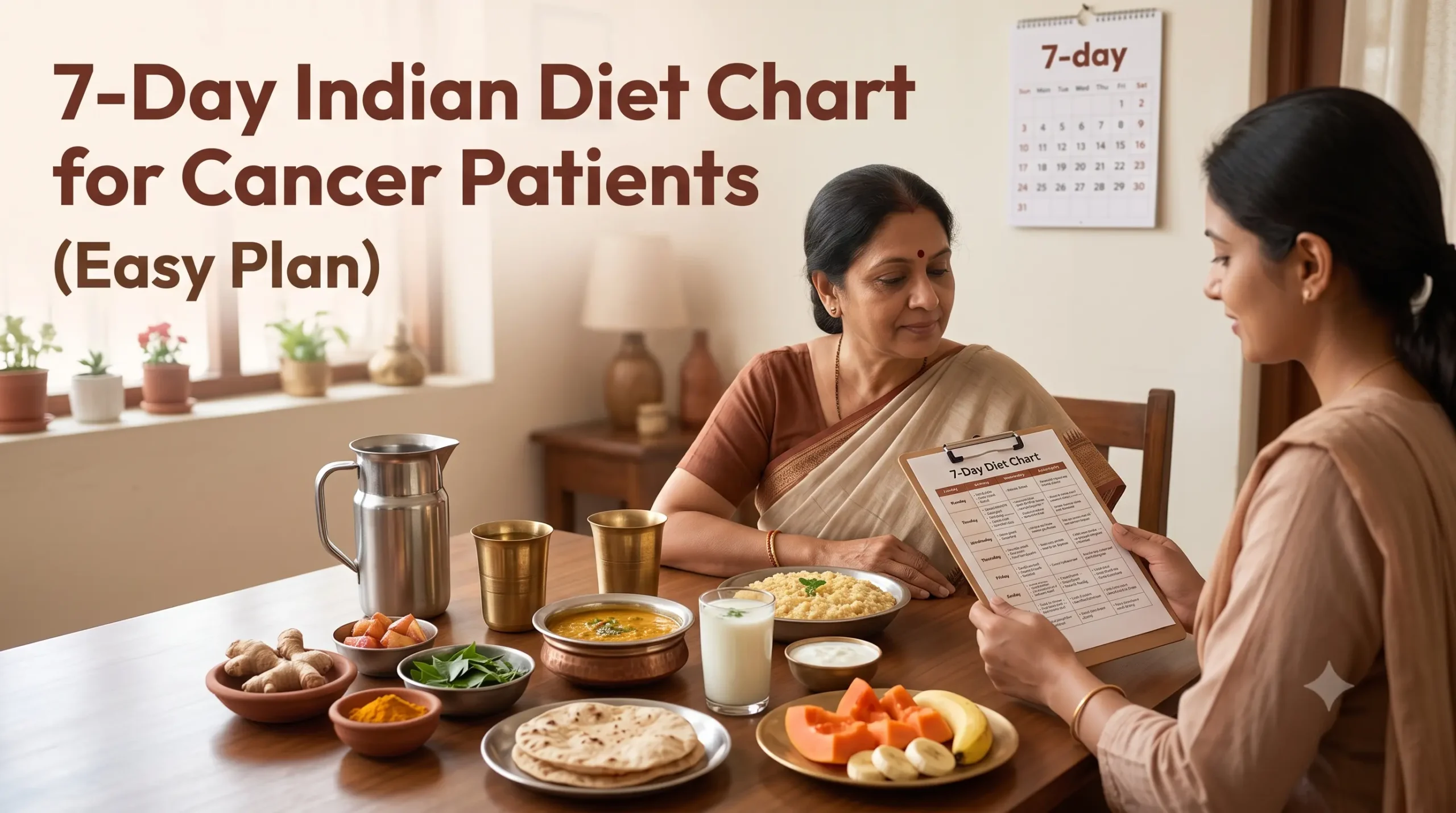
If you’re caring for a loved one going through cancer treatment, you already know the hardest part isn’t just the medicines. it’s figuring out what to feed them every single day.
Chemotherapy often brings nausea, taste changes, and low appetite, and most diet charts available online are built around oats, quinoa, and Western substitutes that don’t fit an Indian kitchen. This makes an already stressful time even more confusing for families trying to keep their loved one strong.
A well-structured cancer diet plan doesn’t need to be complicated or foreign. It needs to be practical, home-cookable, and adjusted to how the patient is feeling that week. This guide gives you a simple 7-day Indian diet chart, explains what to include and avoid, and shows how a personalized approach can make a real difference during treatment and recovery.
What Is a Cancer Diet Plan and Why It Matters
A cancer diet plan is a structured approach to eating that supports the body through the physical demands of chemotherapy, radiation, or recovery. Unlike a general “healthy eating” plan, it accounts for weakened immunity, appetite changes, digestive sensitivity, and the need to preserve muscle and energy.
Nutritional needs shift depending on where the patient is in treatment:
- Before chemotherapy: building strength and nutrient reserves
- During chemotherapy: managing nausea, taste changes, and appetite loss while still getting enough protein and calories
- After treatment: rebuilding immunity, energy, and muscle mass
This is exactly why a generic diet chart for cancer patients found online rarely works, it doesn’t adjust for these stages or for Indian eating habits.
Building an Indian Diet Plan: Key Food Groups
A good Indian diet plan for cancer patients doesn’t require special imported ingredients. It uses familiar staples, adjusted for easy digestion and higher nutrition:
Protein:
moong dal, paneer, curd, eggs, and soft-cooked lentils to help preserve muscle
Complex carbohydrates:
khichdi, dalia, soft rice, and roti for steady energy
Fruits and vegetables:
seasonal, well-cooked or ripe options that are gentle on digestion
Fluids:
soups, coconut water, and buttermilk to maintain hydration, especially on low-appetite days
7-Day Indian Diet Chart for Cancer Patients
This sample cancer patient food chart is a starting template. Portions and spice levels should be adjusted based on appetite, treatment side effects, and a doctor’s or practitioner’s advice.
| Day | Breakfast | Mid-Morning | Lunch | Evening | Dinner |
| 1 | Moong dal cheela + curd | Coconut water | Khichdi with ghee + cucumber | Vegetable soup | Soft roti + dal + steamed sabzi |
| 2 | Vegetable dalia | Fresh fruit (banana/papaya) | Rice + rajma (soft-cooked) + salad | Buttermilk | Khichdi + curd |
| 3 | Poha with peas | Coconut water | Roti + palak dal + sabzi | Vegetable soup | Rice + moong dal + steamed veggies |
| 4 | Suji upma | Fruit | Curd rice + boiled vegetables | Herbal tea | Soft roti + paneer bhurji |
| 5 | Boiled egg/paneer paratha | Buttermilk | Khichdi + ghee + curd | Vegetable soup | Dal + rice + sautéed sabzi |
| 6 | Oats/dalia porridge | Fresh fruit | Roti + dal + light sabzi | Coconut water | Curd rice + boiled vegetables |
| 7 | Vegetable cheela | Herbal tea | Rice + dal + salad | Vegetable soup | Khichdi + curd |
This chart can be repeated with variations based on what the patient tolerates well.
Foods to Include vs. Foods to Avoid
Include: high-protein foods, well-cooked vegetables, hydrating fluids, and easily digestible grains.
Limit or avoid: raw salads and street food (especially during low-immunity phases), excess sugar and fried foods, and alcohol. On days with low white blood cell counts, well-cooked food is generally safer than raw produce, this is something to confirm with the treating doctor.
Common Questions Families Often Ask
Does sugar feed cancer cells?
This is a widely circulated myth. All cells, including healthy ones, use glucose for energy, cutting out sugar entirely doesn’t starve cancer cells and can lead to unnecessary calorie loss during a time when the body needs energy.
Should the patient go fully vegetarian or vegan?
Not necessarily. The priority is adequate protein and calories; sudden major diet changes during treatment aren’t usually advised without guidance.
Is non-veg food safe during chemotherapy?
Well-cooked eggs, chicken, or fish can be included unless the doctor advises otherwise, freshness and proper cooking matter most.
The patient refuses to eat or what now?
Smaller, more frequent meals, cold or room-temperature foods (which often smell less), and flexible meal timing can help more than forcing three large meals.
How Viraj Veda Healthcare Helps
At Viraj Veda Healthcare, Amritsar’s trusted Ayurvedic and homeopathic cancer care clinic, we help patients and families build a practical cancer diet plan that supports the body during chemotherapy, radiation, and recovery.
We guide patients on personalized meal planning using Indian staples, help manage appetite and taste changes through Ayurvedic principles, and provide day-wise food charts that fit real Punjabi and North Indian households, not translated foreign templates.
Our approach combines Ayurveda, homeopathy, and nutrition guidance to work alongside ongoing conventional treatment, and we partner with hospitals including Rajiv Gandhi, Dr. B.R. Ambedkar, Apollo, and Homi Bhabha to support patients through every stage of their care.
Generic Diet Advice vs. Personalized Plan
| Factor | Generic Online Chart | Personalized Plan (Viraj Veda) |
| Food type | Western substitutes | Regional Indian staples |
| Stage adjustment | One-size-fits-all | Adjusted for chemo/radiation stage |
| Ayurvedic integration | None | Combined with natural remedies |
| Caregiver guidance | Minimal | Included |
| Follow-up | None | Ongoing consultation-based |
FAQs
What is the best diet plan for a cancer patient in India?
One built around familiar, well-cooked Indian foods — dal, khichdi, roti, and seasonal fruits — adjusted to the patient’s treatment stage and appetite.
Can a cancer patient eat a normal Indian diet during chemotherapy?
Yes, with modifications for easier digestion, higher protein, and food safety during low-immunity periods.
How much protein does a cancer patient need daily?
Needs vary by individual and treatment type, so protein intake should be personalized with a practitioner rather than following a fixed number.
Is an Ayurvedic diet safe alongside chemotherapy?
Yes, when guided by qualified practitioners who coordinate it as a complement to, not a replacement for, conventional treatment.
Key Takeaways
Personalize the plan by treatment stage, prioritize protein and hydration, avoid raw or street food during low-immunity phases, use this 7-day chart as a flexible starting point, and adjust with professional guidance as needs change.
Ready for a Personalized Cancer Diet Plan?
Every patient’s needs are different. Book a consultation with Viraj Veda Healthcare to get a cancer diet plan tailored to your treatment stage, appetite, and recovery goals, built around real Indian food, not generic templates.
