
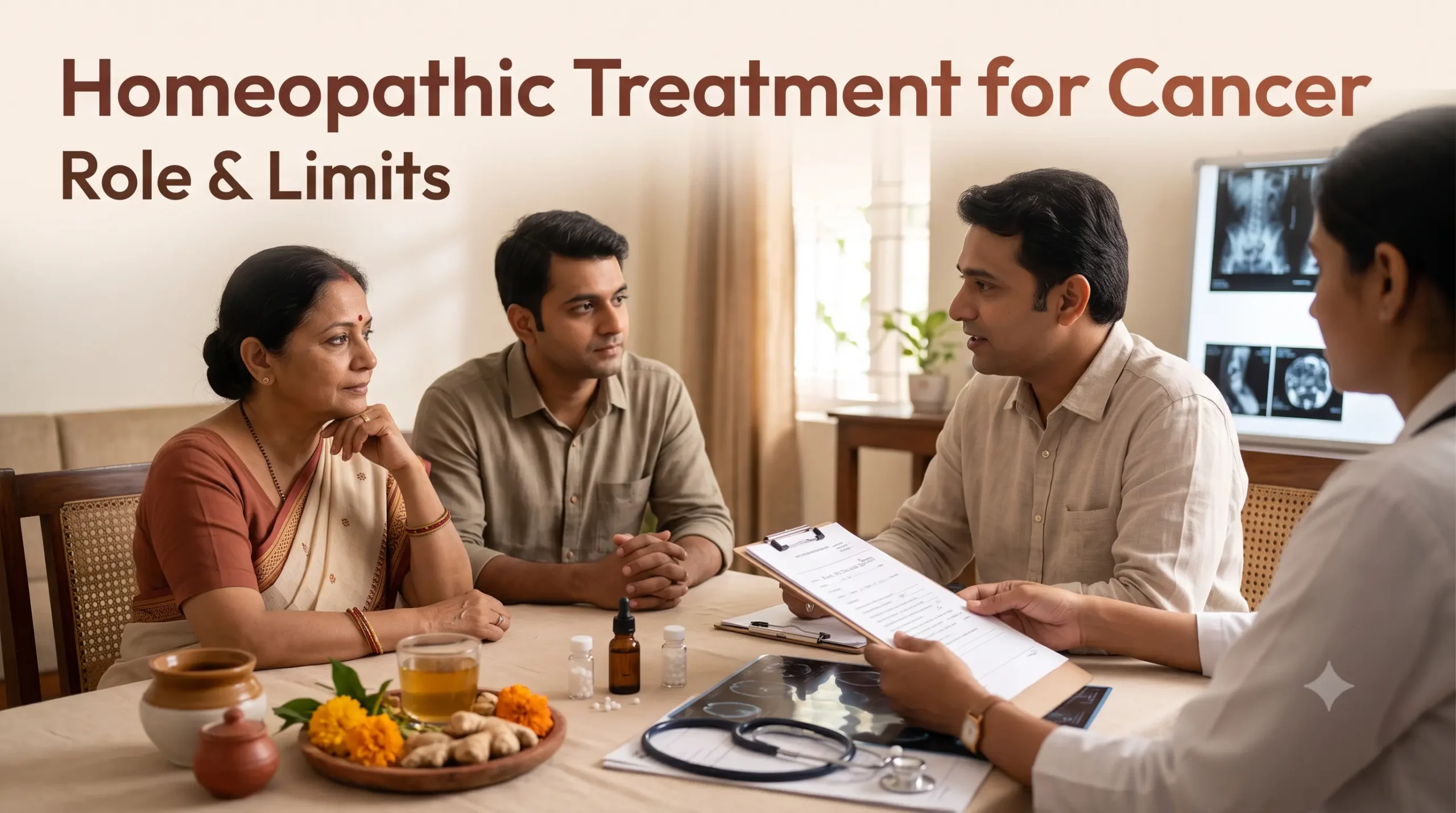
Homeopathic treatment for cancer is not a proven treatment. Homeopathy cannot replace surgery, chemotherapy, radiotherapy or other established care, and there is no reliable evidence that it cures or shrinks cancer. Some patients use it as supportive care for comfort, with their oncologist’s knowledge.
Key takeaways:
- There is no reliable evidence that homeopathy cures cancer.
- Never delay or stop proven treatment to try homeopathy.
- Tell your oncologist about every remedy you take.
What Is Homeopathy & How Does It Approach Cancer?
A cancer diagnosis makes people search for every possible option, including homeopathy for cancer. Claims of cures are everywhere, yet relying on them or delaying proven treatment can cost lives, time and money. A clear understanding of what homeopathy actually is helps you decide safely.
How homeopathy works in principle:
Homeopathy prescribes individualized, highly diluted preparations based on a person’s symptoms, temperament and general health. Most scientists consider its proposed mechanism implausible, which is one reason the evidence for its effects remains weak.
What “homeopathic cancer treatment” means in practice:
In responsible practice it means a supportive consultation focused on comfort, such as pain, weakness, sleep or stress. It does not mean treating the tumor itself.
Where it fits:
At most, homeopathy is complementary, used alongside conventional care. It is never an alternative to it.
A typical example is a family whose relative insisted they “switch to homeopathy.” Instead, they kept the chemotherapy and added a supervised comfort consultation, with the oncologist informed. That is the safe way to approach it.
What the Evidence Says
Can homeopathy cure or shrink cancer?
No. Major cancer organizations, including Cancer Research UK, state there is no reliable evidence that homeopathy can treat or cure cancer.
What research shows for supportive uses:
A few small studies looked at symptoms such as mouth sores from chemotherapy or skin reactions from radiotherapy. Some showed modest promise, but the studies were small and of low quality, so the findings are not strong enough to recommend homeopathy for symptom relief.
Why testimonials aren’t proof:
Stories of people “cured by homeopathy” are common, but they cannot show cause and effect. Patients often also received conventional treatment, symptoms can improve naturally, the placebo effect is real, and we rarely hear from those who did not recover.
| Approach | Role in cancer care | Evidence level | Can it replace oncology? |
| Surgery, chemotherapy, radiation, targeted therapy | Treats the cancer | Strong | Not applicable (core care) |
| Palliative and supportive medicine | Symptom control, quality of life | Strong | No, works alongside |
| Integrative therapies (acupuncture, massage, yoga) | Comfort and coping | Moderate | No |
| Homeopathy | Possible comfort, supportive only | Low, mixed | No |
| “Miracle cure” claims | None | None | Dangerous |
Safe Use, Myths & Red Flags
Myths vs facts
- “Homeopathy can cure cancer.” False. No reliable evidence supports this.
- “It’s natural, so it has no risk.” The real risks are delaying proven treatment and using unregulated products.
- “Stop chemo and go homeopathic.” Dangerous. Never stop treatment without your oncologist’s advice.
- “My relative’s cancer was cured by homeopathy.” Such cases usually involved conventional treatment, a different diagnosis or natural variation.
Red flags:
“Cure” or “100% success” claims, advice to stop treatment, secret formulas, large upfront package fees, pressure to decide quickly and no registration number.
Common mistakes:
Delaying oncology, self-prescribing from the internet, hiding remedies from your oncologist and buying “cancer kits.”
How to choose a practitioner:
Look for a registered BHMS or MD Homeopathy practitioner who is willing to coordinate with your oncologist and is transparent about limits and fees. Ask for the registration number and verify it.
Pros and cons:
Homeopathy offers individual attention and low direct toxicity because of dilution. The cons are limited evidence, cost and the danger of delaying proven care.
Expert tip:
Ask any practitioner, “What do you expect this to do for me, and what will you do if I get worse?” An honest answer is a good sign.
Long-term view:
Supportive care can fit at every stage, from treatment to survivorship, but conventional oncology always stays at the center.
How Viraj Veda Can Help You
Viraj Veda offers homeopathic consultation as complementary, comfort-focused care that works alongside your oncology team.
- Our approach: A detailed review of your symptoms, sleep, appetite and emotional state.
- What to expect: A written plan and scheduled follow-ups as your needs change.
- What we will not do: Promise cures, discourage proven treatment or hide fees.
Book a supportive-care consultation with Viraj Veda today.
FAQs
Can homeopathy cure cancer?
No. There is no reliable evidence that homeopathy cures or shrinks cancer. It should never replace proven treatment.
Is homeopathic treatment for cancer patients safe alongside chemotherapy?
Highly diluted medicines are generally low-risk, but always inform your oncologist first and avoid unregulated products.
What can homeopathy realistically help with?
Some people use it for comfort with symptoms like stress, sleep and weakness. Evidence is limited, so treat it as supportive only.
Should I stop my cancer treatment to try homeopathy?
No. Continue all prescribed treatment unless your oncologist advises otherwise.
