
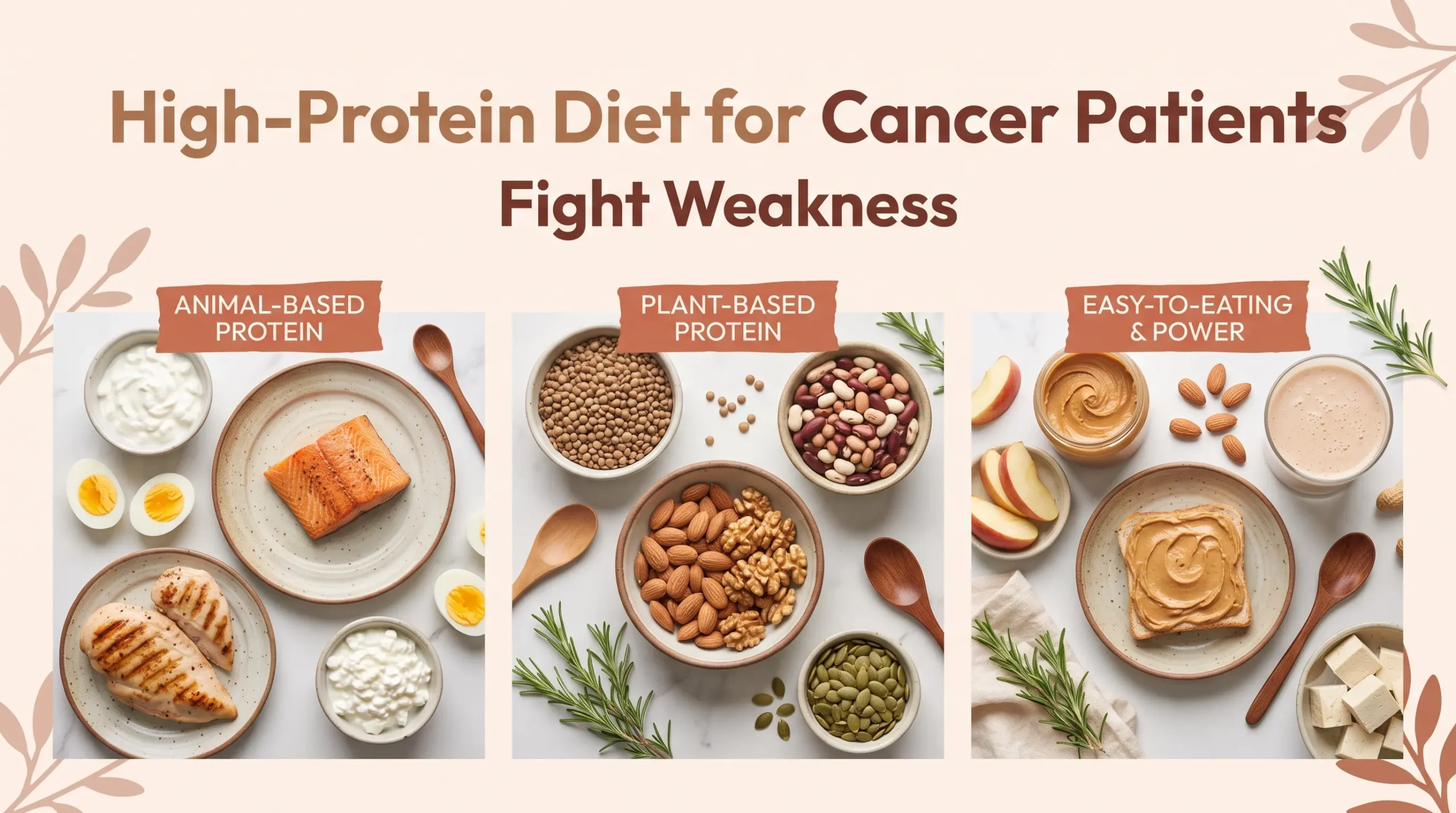
A high protein diet for cancer patients means including protein at every meal and snack, plus calorie-dense foods in small, frequent portions, to protect muscle and body weight. Targets are individual, so your oncology dietitian should set your daily protein and calorie goals.
Key takeaways:
- Weight and muscle loss are among the biggest nutritional risks in cancer.
- Protein at every meal and snack is easier than one big protein meal.
- No food “boosts immunity” in a proven way. Adequate nutrition supports recovery.
Why Cancer Causes Weakness & Weight Loss
Cancer and its treatment can drain appetite, strength and body weight. Muscle loss weakens the body and can make treatment harder to tolerate, while viral diets and “immunity” remedies add confusion and risk.
How cancer and treatment affect appetite:
Nausea, taste changes, early fullness, mouth sores and inflammation all reduce how much you eat and change how your body uses energy.
Why muscle loss matters:
Muscle supports strength, treatment tolerance and recovery. This is why a diet for cancer weakness focuses on protein and calories, not “perfect” eating.
When to call the doctor:
Rapid weight loss, being unable to eat or drink for a day, or persistent vomiting needs prompt medical attention.
A typical example is a family that noticed their mother losing weight during treatment. They added one protein item to every snack, such as curd with nuts, paneer cubes or a besan chilla. Within a few weeks her weight stabilized.
High-Protein, High-Calorie Diet: What to Eat
How much protein and how many calories?
Needs depend on your weight, cancer type, treatment and conditions like kidney, liver or diabetes issues. Dietitians usually set protein targets per kilogram of body weight. Ask for your personal numbers rather than copying a generic figure.
Protein sources (vegetarian):
Dal, moong, chana, rajma, paneer, pasteurized milk and curd, soy chunks, tofu, besan, nuts and seeds.
Protein sources (non-vegetarian):
Well-cooked eggs, fish and chicken.
High-calorie additions for cancer patients:
Ghee in moderation, nut butters, full-fat milk, dry fruit powder, coconut and banana shakes.
Sample Indian day plan (adjust to your tolerance):
- Breakfast: Besan chilla or paneer paratha with curd
- Mid-morning: Banana milkshake with a spoon of nut powder
- Lunch: Dal, rice or roti, cooked vegetables, a side of curd
- Evening: Soaked nuts or a protein-rich soup
- Dinner: Moong khichdi with ghee, or egg curry with soft roti
- Bedtime: Warm milk with dry fruit powder, if tolerated
Easy Ways to Add Calories & Protein
Fortify what you already eat:
Stir milk powder into soups and porridge, add ghee to khichdi, stuff parathas with paneer, and spread peanut butter on toast. This raises nutrition without increasing portion size.
Small, frequent meals:
Eat every 2-3 hours by the clock, not by hunger. When appetite is poor, hunger is an unreliable signal.
Liquid options when chewing is hard:
Smoothies, milkshakes and soups work well. Oral nutrition supplements can help, but use them under a dietitian’s guidance.
Diet for cancer weight gain:
Aim to stop weight loss first, then rebuild gradually. Pair protein with calorie-dense foods, and avoid relying on tea, thin soups or water alone.
“Immunity boosting” foods, realistically:
No single food boosts immunity during treatment. A varied diet with fruit, vegetables, protein and enough calories supports recovery. Be careful with herbal and “immunity” supplements, since some interact with treatment. When blood counts are low, keep food safety strict: cooked food, washed produce, pasteurized dairy and no roadside food.
Gentle movement:
Short walks, if your doctor approves, can help appetite and preserve muscle.
Myths, Mistakes & Comparison Table
Common myths
- “Cut sugar and carbs to starve the tumor.” All cells use glucose. Extreme restriction mostly causes weight and muscle loss.
- “Keto or juice diets cure cancer.” There is no reliable evidence for this.
- “Protein feeds cancer.” No. Adequate protein protects muscle and strength.
- “Immunity boosters during chemo are always safe.” Interactions are possible. Clear everything with your oncologist.
Common mistakes:
Waiting for hunger, relying on thin liquids, overdoing supplements and copying a stranger’s diet.
| Food source | Protein | Calorie boost | Easy for low appetite? | Note |
| Dal or moong khichdi with ghee | Good | High | Yes | Soft and familiar |
| Paneer or tofu | High | Moderate | Yes | Add to parathas or curries |
| Eggs (well-cooked) | High | Moderate | Yes | Avoid raw or runny |
| Milk or curd (pasteurized) | Moderate | Moderate | Yes | Fortify with milk powder |
| Nuts and nut butters | Moderate | Very high | Small portions | Soak or grind if mouth sores |
| Soy chunks | High | Low-moderate | Moderate | Soak and cook well |
Pros and cons:
A high-protein, high-calorie plan helps preserve muscle and improves treatment tolerance. The downsides are possible digestive discomfort, and people with kidney, liver or diabetes conditions need adjusted targets.
Expert tip:
Protein at every meal and snack is easier to sustain than one large protein meal.
Questions to ask your dietitian:
- What are my daily protein and calorie targets?
- Do I need oral nutrition supplements?
- How should I adjust for kidney problems or diabetes?
- What weight should I aim to maintain?
How Viraj Veda Can Help You
Viraj Veda offers complementary, comfort-focused care that works alongside your oncology team and dietitian.
- Our approach: A detailed review of your weakness, appetite and daily routine.
- What to expect: Practical comfort tips and scheduled follow-ups as your symptoms change.
- What we will not do: Promise cures, advise stopping treatment or replace medical nutrition advice.
[Add practitioner name, qualification, registration number and experience here.]
Book a supportive-care consultation with Viraj Veda today.
FAQs
1. How much protein do cancer patients need?
It varies by weight, treatment and health conditions. Needs are often higher than usual, and a dietitian sets a personal target.
2. What should I eat to gain weight during cancer treatment?
Eat small, frequent meals with protein and calorie-dense foods like ghee, nut butters, paneer and full-fat milk.
3. What can I eat for weakness if I have no appetite?
Try small portions every 2-3 hours, smoothies, soups and fortified porridge. If you cannot eat or drink for a day, contact your team.
4. Do immunity boosting foods help cancer patients?
No food proves to boost immunity during treatment. A balanced, calorie-adequate diet supports recovery. Check supplements with your oncologist.
